


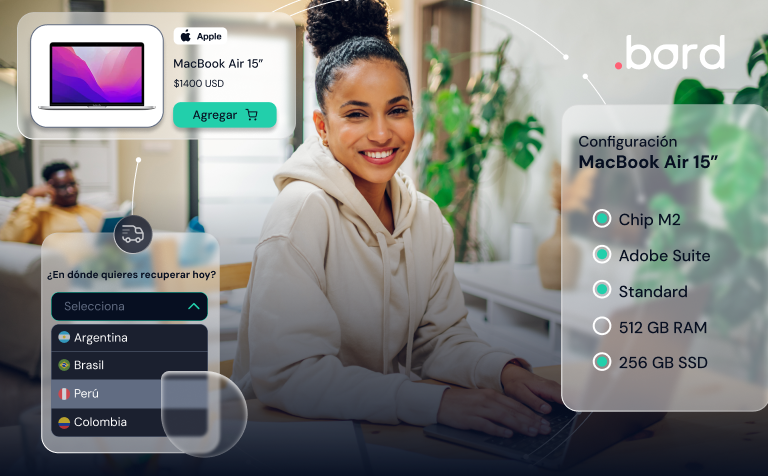
At Bord, a team isn't just a purchase.
It is an asset that we manage From start to finish, accompanying companies from the acquisition to the second life of the equipment, with control, traceability and intelligent decisions at every stage.
1. Purchase of the equipment
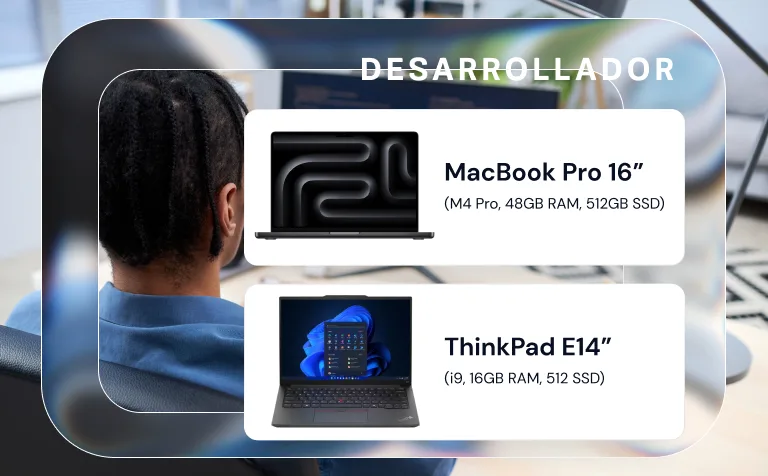
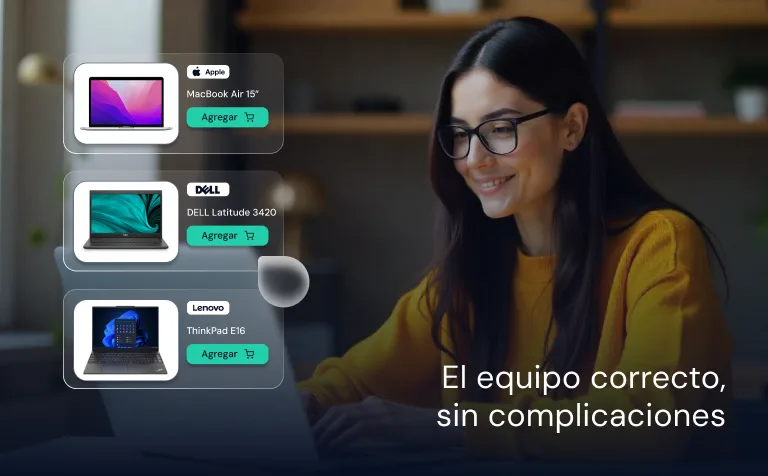
The cycle begins with selecting the right device for each role, country and budget.
From Bord, companies can:
- Buy laptops, monitors and accessories.
- Choose brands, models and configurations.
- Define how and where each order is invoiced (local or centralized).
From the outset, the team is thought of as a managed asset, not as an isolated purchase.
2. Configuration and enrollment (warehouse or remote)
Preparing equipment does not always require it to physically pass through a warehouse.
Depending on the case, Bord can:
- Set up and prepare the equipment in the warehouse.
- Remotely enroll the device using Zero Touch Enrollment (ZTE), without manual intervention.
- Apply security and configuration policies from the first power on.
This is possible because Bord acts as authorized reseller of manufacturers such as Apple, allowing the equipment to arrive ready to work without intermediate steps.
The result is the same:
a frictionless experience for IT and for the employee.
3. Collaborator onboarding
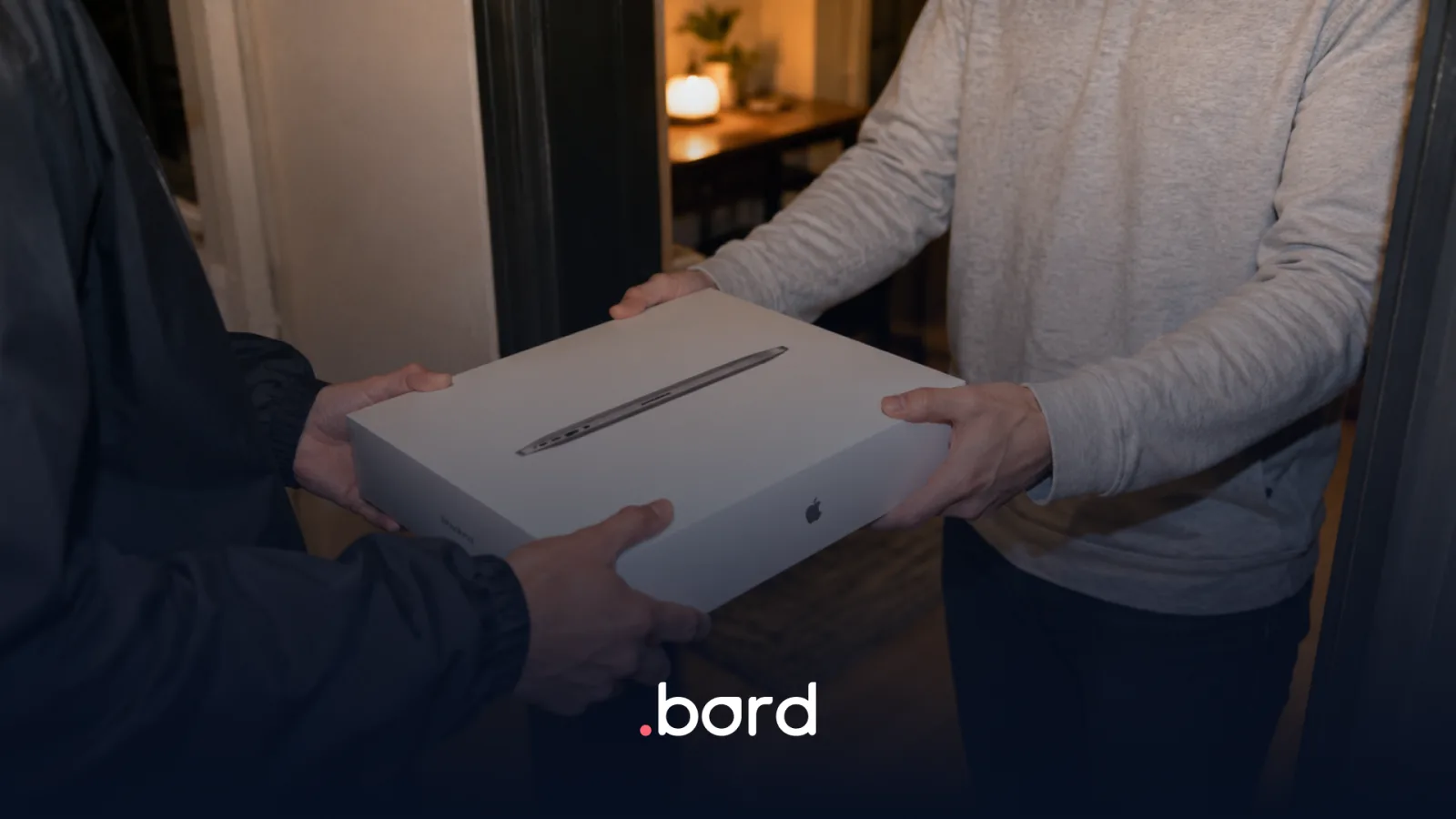
The equipment is sent directly to the collaborator's home or to a local office.
This allows:
- Delivery aligned with the date of entry.
- Fewer manual tasks for IT.
- A positive experience from day one.
The collaborator receives the equipment ready to use.
4. Management during use
During use, the equipment remains under control.
Bord allows:
- Know where the device is.
- Who it is assigned to.
- What accessories it has.
- What state are you in.
The asset remains visible and manageable throughout its useful life.
5. Offboarding and recovery
When the employee leaves the company, Bord coordinates the return of the equipment.
Recovery can be done:
- From the collaborator's home.
- From local offices or hubs.
The objective is to avoid losses and ensure continued control of the asset.
6. Real State Assessment (DSN + Grading)
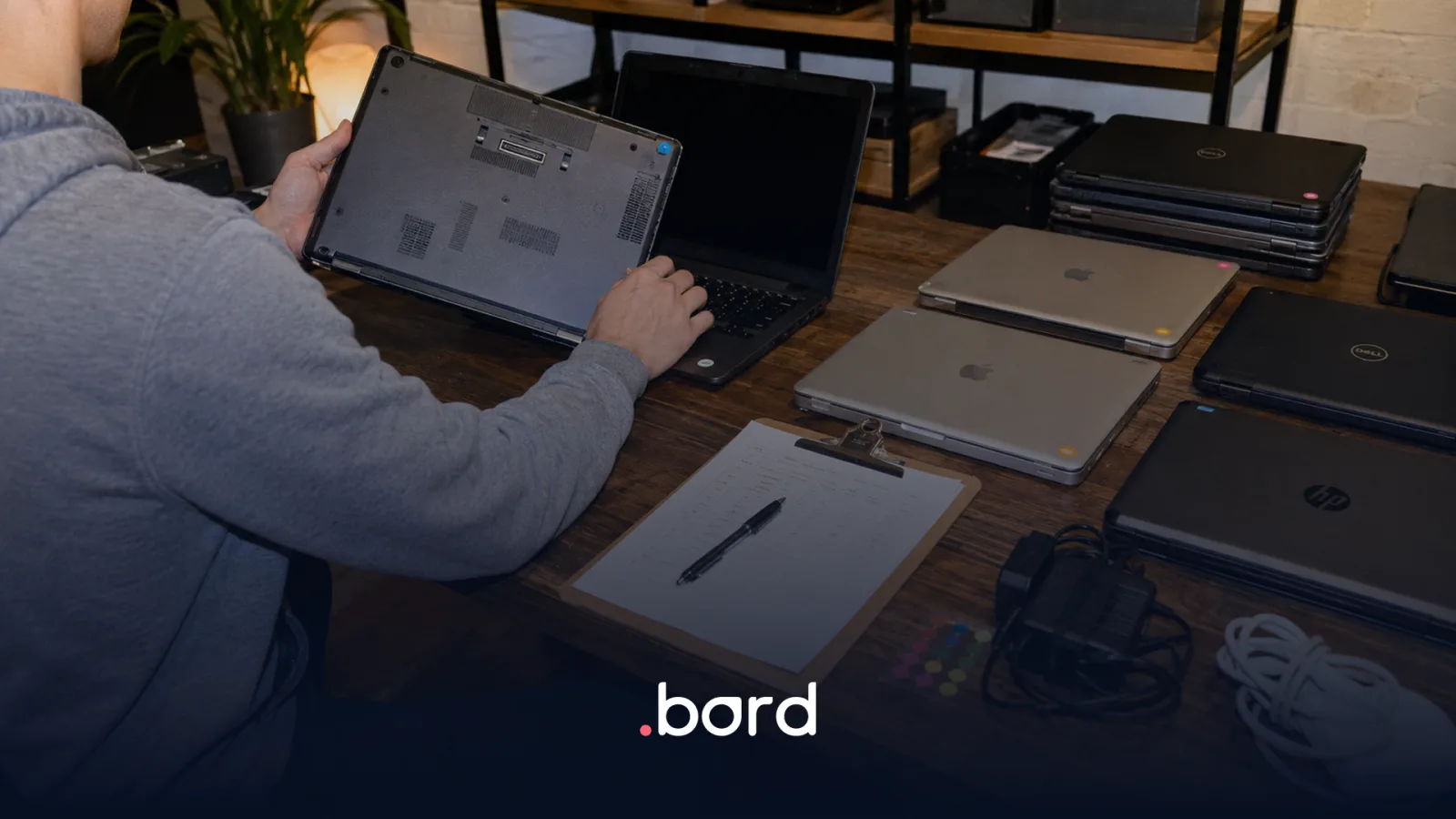
Once recovered, the equipment is evaluated objectively.
It analyzes:
- Physical state.
- Operation.
- Battery
- Blocks or formatting.
- Degree of wear.
All of this information is documented in the DSN (Device Status Notification), reflecting the real state of the equipment.
7. Decision: reuse, store or sell
With specific information, the company decides on the next step:
- Reuse the team for a new collaborator.
- Store it safely.
- Enter it into a Buyback process.
- Send it for recycling or destruction.
Decisions are made with real data, not with assumptions.
8. Buyback: extend the lifespan of the equipment
If the equipment is no longer going to be reused, Bord can manage it as part of the Buyback process.
This allows:
- Recover economic value.
- Reduce inventory or storage costs
- Give a second life to the device.
9. Closing the cycle
When equipment is no longer reusable or saleable:
- It is recycled.
- Or it is destroyed in accordance with local regulations.
This closes the cycle in a responsible way.
In short
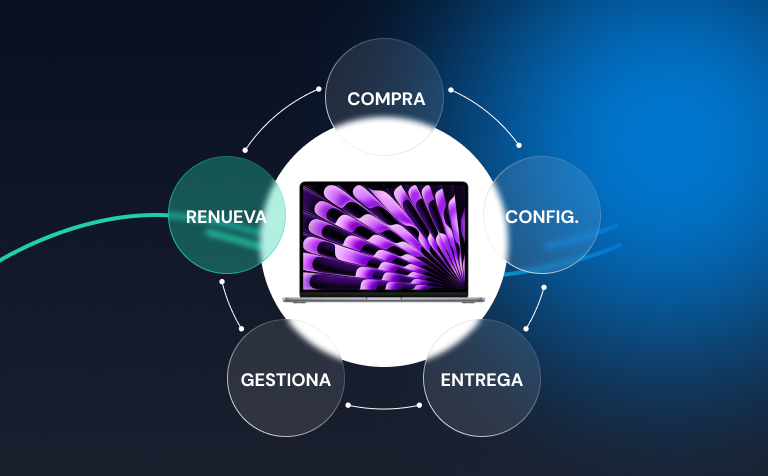
The cycle of a device in Bord is:
Buy → Configure or Roll Up → Deliver → Manage → Recover → Evaluate → Reuse or Sell → Recycle
Everything from:
- A single supplier.
- A single platform.
- A single standard across the region.
Bord transforms IT teams into managed assets, not operational problems.