


In the digital age, data is one of the most valuable assets of any company. However, when it comes time to replace or return equipment, many organizations underestimate the risk of not properly deleting the information they contain.
Deletion or incomplete formatting can expose the company to sensitive data leaks, legal sanctions, and loss of trust on the part of customers and employees.
To avoid this, the standard NIST 800-88 has become the global reference for ensuring a secure and verifiable deletion of data. At Bord, we apply this protocol to our certified erasure service, helping global companies operate with security and compliance throughout Latin America.
What is NIST 800-88?
El NIST 800-88 Is a guide developed by the National Institute of Standards and Technology of the United States, which establishes the recommended methods for Data sanitization on digital storage media.
Unlike a “common deletion” —which can leave recoverable traces—this standard ensures that information is deleted in a way irreversible, complying with the highest levels of security.
In a nutshell:
- Manual deletion or “quick formatting” doesn't guarantee that data will disappear.
- With NIST 800-88, the device is free of sensitive information and ready to be safely reused, recycled or resold.
Why is it important for companies?
Adopting a certified data erasure protocol isn't just good practice: it's a strategic need.
- Regulatory Compliance: helps align with frames such as ISO 27001, GDPR, HIPAA, or SOC 2, avoiding sanctions.
- Protection against information leaks: prevents unauthorized access to financial, personal or confidential data.
- Customer and employee trust: ensures that information linked to individuals is not exposed.
Corporate Reputation: a single leak can have a very high cost in terms of image and credibility.
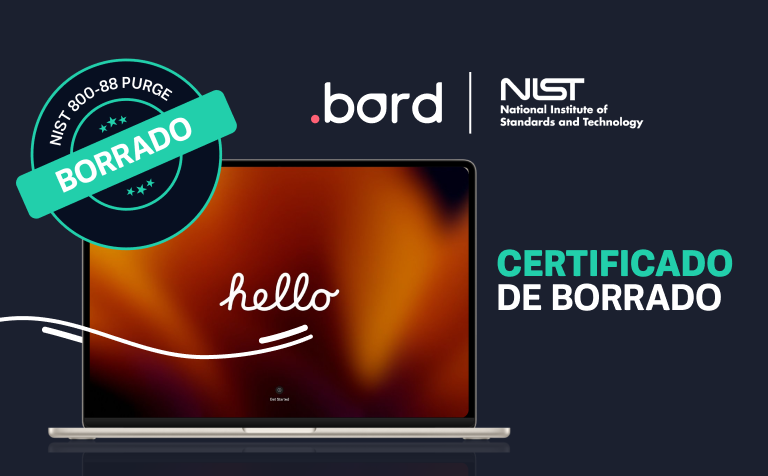
The Bord service: erased with certificate
At Bord, we apply the standard NIST 800-88 in our data erasure service, ensuring traceable and secure processes throughout the region.
This is how it works:
- Collection and traceability: we manage equipment from removal to deletion in our centers.
- Deleted certificate: We apply NIST 800-88 to notebooks, desktops, tablets and smartphones.
- Issuance of certificate: Each device receives a verifiable erasure certificate, valid for audits and compliance.
Key Benefits:
- Documentary evidence for legal and regulatory processes.
- Preparing equipment for programs of BuyBack, Leasing or Reuse.
- Safety in processes of Offboarding of employees in any LATAM country.
Use cases in Latin America
Our certified erasure service is already helping global and regional companies in critical sectors:
- Banks and financial institutions: where the protection of customer data is mandatory.
- Technology companies: with high device turnover and the need to comply with audits.
- Global Corporations with operations in LATAM: which must guarantee standardized processes in multiple countries.
Conclusion
Secure data deletion is no longer optional: it is a pillar of information security and corporate compliance.
With the standard NIST 800-88 and the Bord certified service, your company gains the peace of mind that sensitive information will never be at risk again, while optimizing the reuse or recovery of value of its devices.
👉 Learn how Bord protects your information and request a demo of our certified deletion service.