


When a company evaluates selling equipment in a Buyback process, it is normal to ask
Why two apparently similar computers can have very different values.
The price is not defined by a single factor, but by the combination of several elements that determine the real value of the equipment in its second life.
At Bord, we evaluate each device comprehensively, seeking a fair valuation aligned with the market.
The key factors that influence the price of a Buyback
1. Make and model
The make and model are the starting point, but not all models age the same.
Example:
At Apple, computers with processors M1 or higher they maintain good resale value.
Instead, Apple computers with processors Intel i7 are already considered, in many cases, waste equipment, even if they work properly.
This does not mean that they do not work, but that market demand is much lower.
2. Year of the team
The year is still an important factor.
The older the equipment, the harder it is to find a buyer willing to reuse it, especially when there are newer generations with better efficiency and support.
3. Processor, RAM and disk
Technical specifications influence, but always within the context of the current market.
- Newer processors are in greater demand.
- More RAM and SSDs help sustain value.
However, a good technical data sheet does not compensate for poor physical or functional condition.
4. Physical state
Physical condition has a direct impact on price.
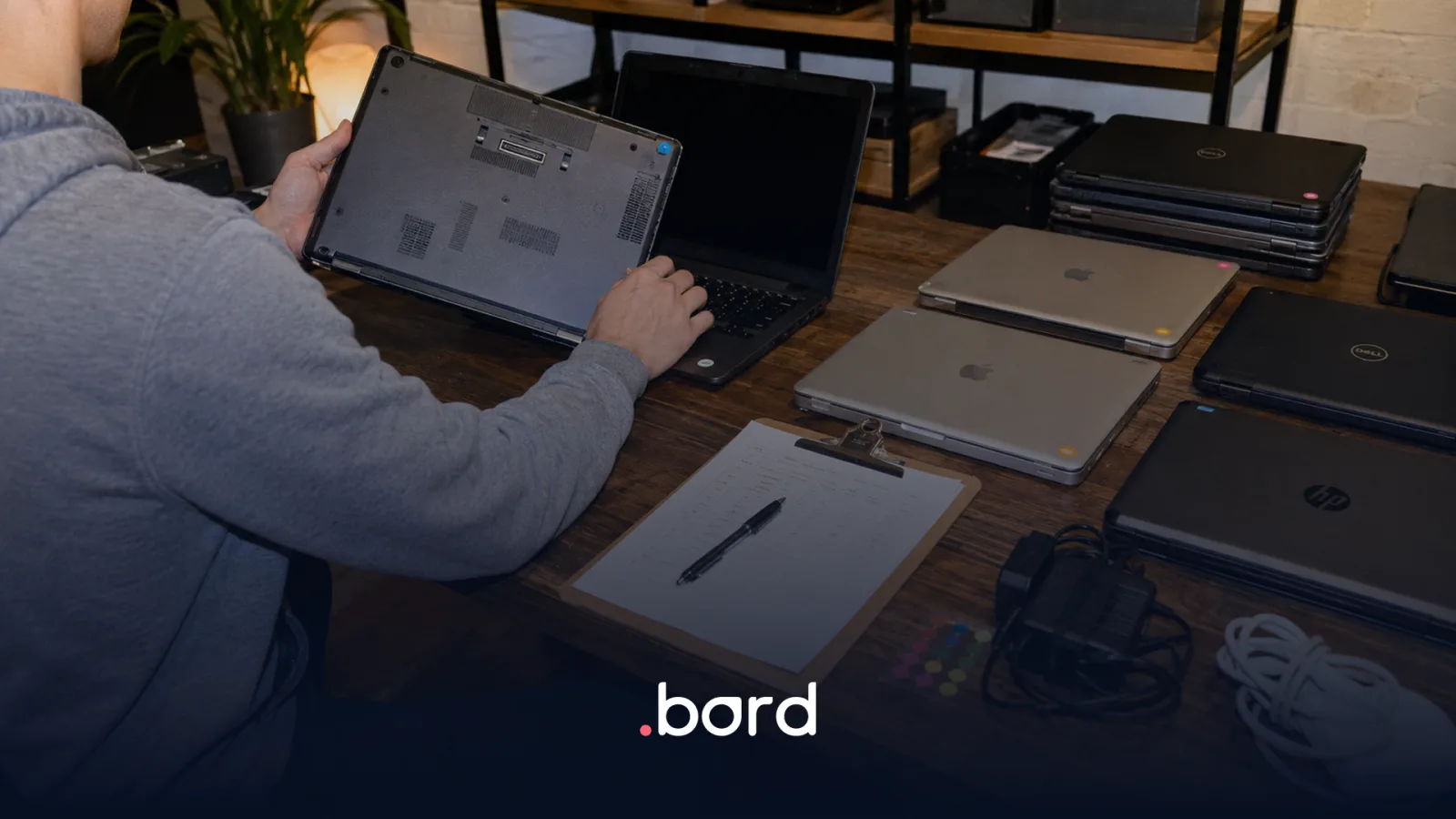
Scratches, bumps, keyboard wear or visible marks reduce value, because they affect the next user's experience and the possibility of resale.
The better the equipment is, the higher its value within the Buyback.
5. System operation and status
For equipment to have good Buyback value, It should work properly.
- Equipment that doesn't turn on
- Locked devices (iCloud, MDM, Google Lock)
- Computers without an operating system
have a much lower value, since they cannot be easily reused or require additional processes to become operational again.
6. Operating system type and version
On Windows computers, the type of operating system influences the price.
- Teams with Windows Pro have better resale value.
- Teams with Windows Home they tend to trade lower.
This is because Windows Pro is aimed at business environments, while Windows Home targets the home market.
7. Type of equipment: business vs home
Not all Windows computers are intended for the same use.
- Lines Business (corporate) maintain better value.
- Home-oriented equipment usually depreciates faster.
This has a direct impact on demand and the final price.
8. Accessory status
A complete team has a better way out.
- Original charger
- Cables in good condition
The absence or poor condition of accessories reduces the value, because the next user will have to replace them.
9. Country where it is marketed
The country also influences.
The availability of models, local prices, taxes and demand mean that the same equipment may have different values depending on the country where it is bought or sold.
An important clarification
Once an equipment has been used, its value is defined by its current state and its potential for reuse, not by its original price or by how much it cost when it was purchased.
The Buyback seeks Give a second life to the team, do not compare it to a new purchase.
In short
To quote a Buyback, the following are taken into account:
- Make and model
- Year of the team
- Processor, RAM and disk
- Physical state
- Operation and operating system
- Type of equipment (business or home)
- Accessory status
- Country where it is marketed
Understanding these factors helps to have realistic expectations and to take advantage of the Buyback as a tool to recover value, reduce costs and simplify team management.
Want to quote it in a minute? Find out what your Mac is worth and see how the buy back works.