


Shortage of RAM and SSD in 2026: Why 32GB is stressed first (and how to secure laptops for onboarding in LATAM)
If your company is hiring in Latin America, there is a silent risk that can take a long time Onboarding and replacements: the volatility of components (RAM and storage)) is pushing for more frequent increases and, above all, quotes with lower validity in several manufacturers.
This article explains the context in simple terms, and reduces it to concrete actions so that PYou can enter, buy and execute without your operation depending on “if there is stock” or unannounced delays.
Summary in 60 seconds
- In 2026 (especially in Q1), strong pressure is projected on DRAM (RAM) and NAND (SSD) costs), which is usually transferred to laptop lists and configurations.
- Internally, our purchasing team has already received notices of quarterly adjustments on Windows computers (Dell/Lenovo) and the need to shorten the validity of quotes.
- 32GB tends to strain before 16GB because it's becoming the new corporate standard (more demand, more bottlenecks).
- The best strategy in LATAM: buy in advance + choose standard configurations “in place” + close quick order.
What we're seeing in 2026 (market estimates that we follow)
Important: These percentages usually refer to components (DRAM/NAND) and do not imply that the laptop goes up “1 to 1”. But they do explain why the market is becoming more volatile and why brands adjust price lists and validity.
[TABLE]
What's going on (the root of the problem)
In January—February 2026, several industry reports and communications have been marking the same thing:
- very strong demand driven by AI infrastructure,
- limited supply/adjusted capacity,
- and a market where availability and price move faster than in a “normal” cycle.
Lenovo, for example, informed the market that the limited availability of components (especially memory and storage) is impacting costs, and that there will be more clarity between standard (more predictable) configurations and customized solutions (longer deadlines).
Practical translation: it's not just “go up the price”. The big problem is that Predictability is broken.
What changes in Windows purchases (Dell/Lenovo): go up + shorter quotes
Our purchasing team shared a clear internal update:
- Dell and Lenovo reported price increases between 10% and 20% quarterly (in some lines/configurations).
- The main driver: RAM and storage shortage/pressure.
- Operational consequence: reduce the validity time of quotes. Brands aren't being flexible about maintaining prices for long periods of time.
What does it mean to you
- Quoting is not enough: if you need to ensure conditions, the most important thing is Close the order within the validity period.
- Custom configurations (CTO) are more fragile: more RAM/SSD usually means more variability in price and lead time.
Quarterly planning: if you have constant hiring, avoid buying “just when you need it”.
Why 32GB is stressed before 16GB
With the tight market, 32GB becomes the “new standard” for many roles (more tools, more multitasking, more security agents, more workloads with AI). That generates:
- More companies asking for 32GB (demand rises)
- Prioritized assignment by manufacturers (contracts, markets, lines)
- Bottleneck more visible in “less common” or more premium configurations
Instead, 16GB It usually stays better by volume (no guarantee), but it can also tense up if the shortage worsens.
Why LATAM feels more
Latin America usually amplifies these types of cycles by a combination of:
- variations by country (channels, imports, taxes, times),
- lower stock elasticity in some places,
- more reliance on “on demand” on specific configurations,
- and the need to cover multiple cities (not just capitals).
Typical result: What in a large market is “the list moved”, in LATAM it can become delay + price change + recommended configuration change.
Operational Estimate (Bord): If the tension continues, some configurations on request may change to long windows (months) in certain countries and lines. That's why the winning strategy is “in place + standard”.
What we recommend from Bord
1) Buy in advance... and the order will close
In a volatile market, the difference isn't “having a budget”: it's have a confirmed order.
- If you will be boating in 30—90 days: prioritize Models in the square and buy now.
- If you look 90—180 days: Build a plan by country and roles to reserve availability.
2) Standardize 1—2 models per role (reduces friction)
The more variants, the more risk. A simple scheme:
- Corporate standard (majority): 32GB
- Lightweight Ops/admin (if applicable): 16GB
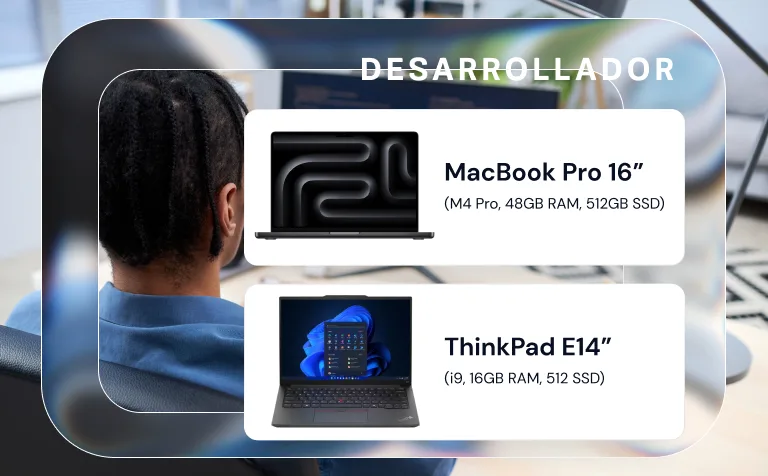
- Dev/data/design: 32GB as a base (and corresponding storage)
This makes your onboarding more predictable and reduces “last-minute” changes.
3) Dell and Lenovo: Plan ahead
They are corporate pillars. When the market tightens, they tend to first feel the tension due to volume and mix of configurations.
4) And Apple?
According to the channel's commercial communication, Apple It does not expect list increases in the short term; even so, in supply/demand contexts availability and times they can move.
Practical recommendation: if you're looking for maximum predictability (and the role justifies it), Evaluate Apple as an alternative can be a good continuity strategy for critical or executive teams.
What Bord is doing to help you not slow down your operation
At Bord, we are working with manufacturers and partners to ensure availability in the countries where we operate, focusing on:
- standard configurations (more predictable in price/time),
- standardised “en plaza” models,
- and alternatives by brand when a role requires continuity and low tolerance for delays.
Next step (frictionless): go in, buy and go
If you want to turn this context into action today, this is the most direct path:
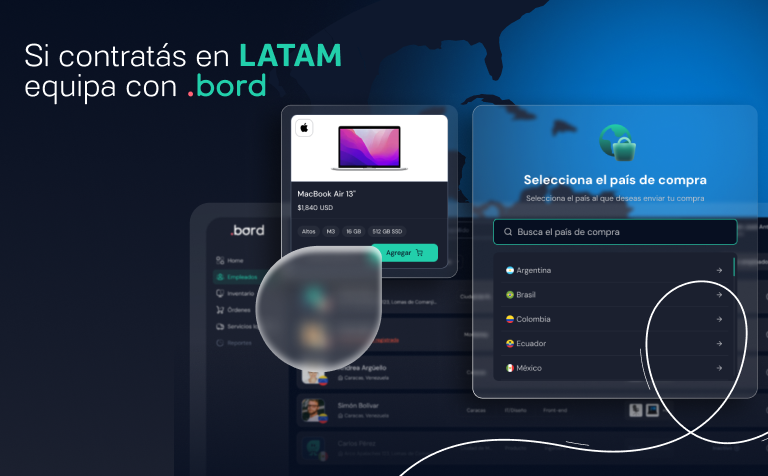
- Access the Bord catalog
- I chose country + role (onboarding/replenishment/growth)
- Filter by standard configuration (16GB/32GB) and In the square
- Confirm the order within the validity period to ensure conditions
- Bord executes: purchase, delivery, tracking and local coordination
If your case is more complex (large volume, PO, critical dates, multiple countries), yes: coordinate with your KAM to put together a 60/90/180 plan and, if applicable, reservations.
FAQ
Is there a RAM production crisis?
Rather than “stopped” factories, it is a context of tensioned supply/allocations: high demand + limited capacity + rising prices (especially in Q1), making the market more volatile.
Which configuration will be most scarce?
In general, 32GB tends to get stressed first because it's becoming a corporate standard. The configurations with more RAM + more SSD are usually more sensitive to change.
Why do quotes last less now?
Because with frequent increases and changes in component costs, several manufacturers are shortening the validity of prices and differentiating more between standard and custom. Recommendation: If the equipment is critical, Close order within validity.
What do I do if I have continuous hiring in LATAM?
Three things:
- Inform your KAM about projections
- If possible, plan 60/90/180 days with your KAM,
- to standardize “in square” models,
- purchase/confirm quickly to ensure conditions.
Does this also affect offboarding?
Not on the subject of time and recovery. But in offboarding and replacements, the key is to have a continuity plan: regional stock, standard models and alternatives ready not to slow down replacements and give continuity to your equipment.