


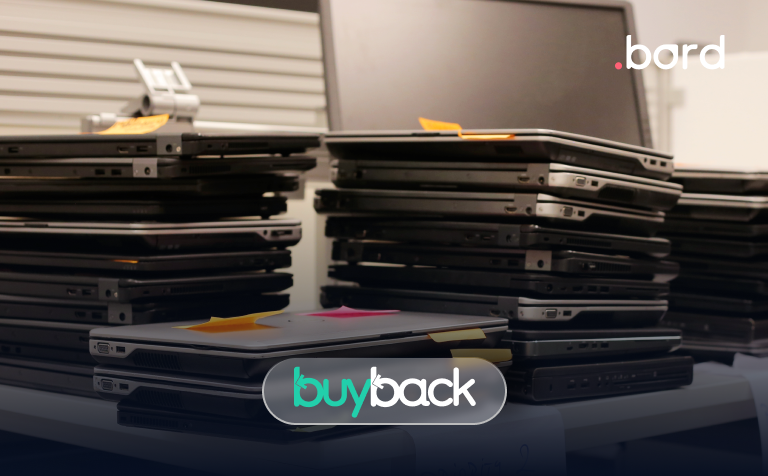
What is the Buyback of IT equipment and why more and more companies are choosing it
The Buyback of IT equipment is a process through which companies can sell technological equipment that they no longer use, recovering part of its economic value and reducing operating costs associated with storage, management and disposal.
In remote work contexts and distributed teams, Buyback becomes a key tool for:
- Optimize IT inventory
- Reduce unnecessary expenses
- Accompany sustainability and circular economy policies
At Bord, Buyback is part of a comprehensive equipment lifecycle management strategy.
What teams apply to the Bord Buyback
The Bord Buyback Program not limited to equipment purchased with Bord.
It applies both to equipment managed in our warehouses and to equipment purchased from other suppliers.
Accepted equipment types
- Notebooks: most models, as long as they work and are not locked.
- Monitors: subject to evaluation by state.
- Cell phones: in most cases, depending on the state.
- accessories: only closed and unused.
Faulty equipment is also acceptable, as long as it is functional.
Equipment that doesn't work or is blocked receive residual offers or is not purchasable.
Buyback in LATAM and the United States
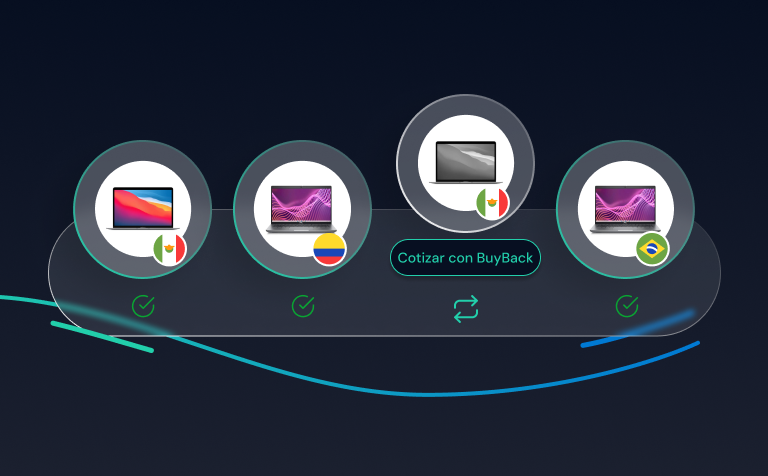
The Bord Buyback program currently operates in the The vast majority of Latin American countries, allowing regional and global companies to manage the repurchase of equipment under the same process, without depending on isolated local suppliers.
Countries where Bord manages Buyback processes
Latin America:
- Argentine
- Bolivia
- Brazil
- Chile
- Colombia
- Costa Rica
- Ecuador
- Salvador
- Guatemala
- Honduras
- Mexico
- Jamaica
- Nicaragua
- Panama
- Paraguay
- Peru
- Dominican Republic
- Uruguay
United States:
- United States of America (USA)
This regional reach allows Buyback processes to be executed both for individual equipment as well as for complete fleets, maintaining operational standards, traceability and control in all countries where Bord has a presence.
When should you execute a Buyback
The Buyback is optional and can run at any time in the computer's cycle.
The most common cases are:
Offboarding
Ideal when the equipment will not be reused by another collaborator.
Renovation of the technology park
Widely used for large fleets, since the credit received helps reduce the cost of the new purchase.
Headcount reduction
It allows you to avoid storage costs for equipment that will not have future use.
Change of technology
Similar to fleet renewal, with a focus on upgrading performance.
How does the Buyback process work on Bord
1. Initial offer
The customer submits a list of equipment.
Based on the reported status and market value, Bord consults with its buying partners and presents a Estimated initial offer.
When equipment is in the warehouse and has DSN, this offer is usually closer to the real value.
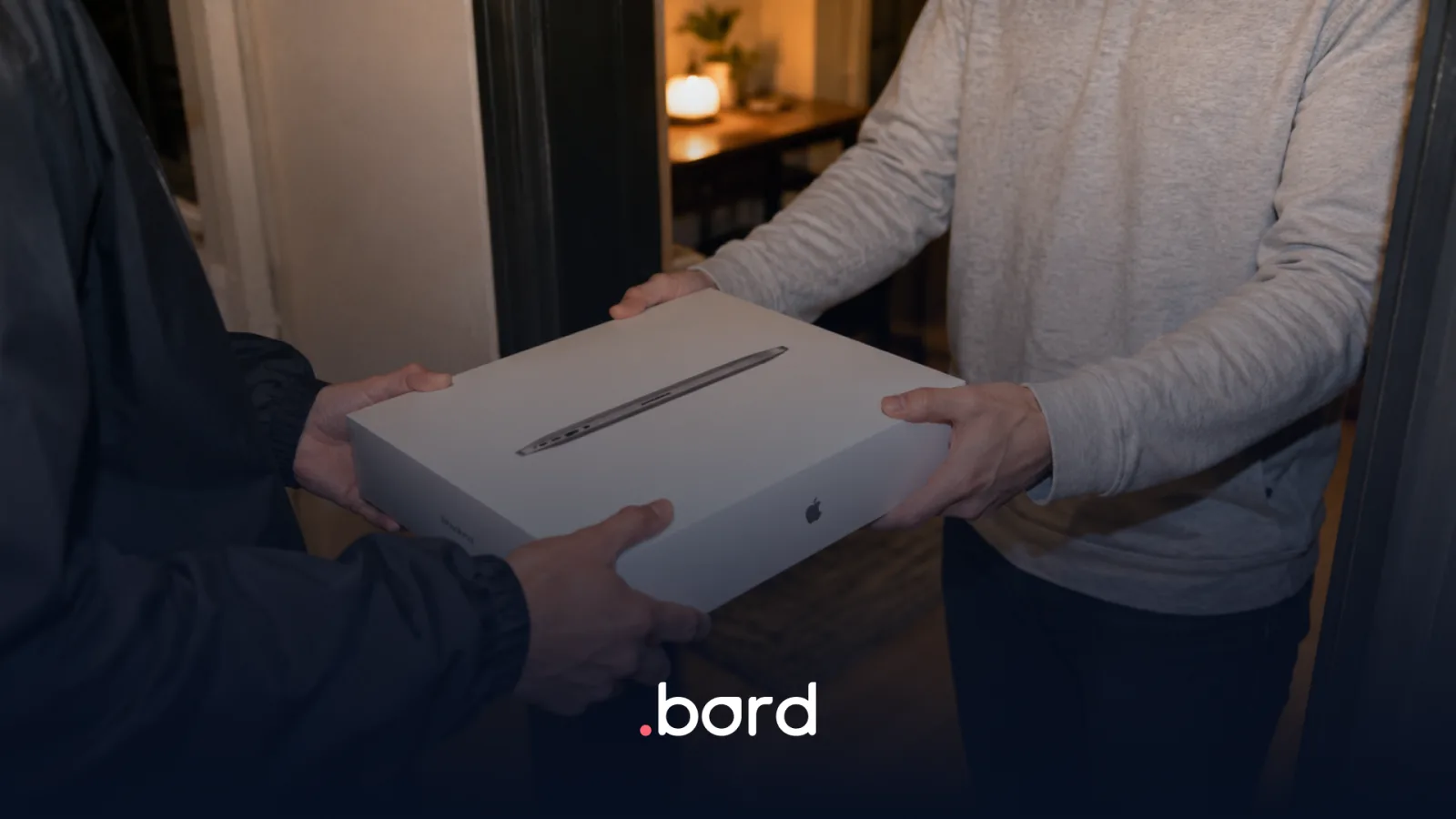
2. Shipping the equipment
The shipment of equipment to the Bord warehouse is managed by the customer, requesting it through the platform.
The withdrawal can be done both from the collaborator's home and from offices.
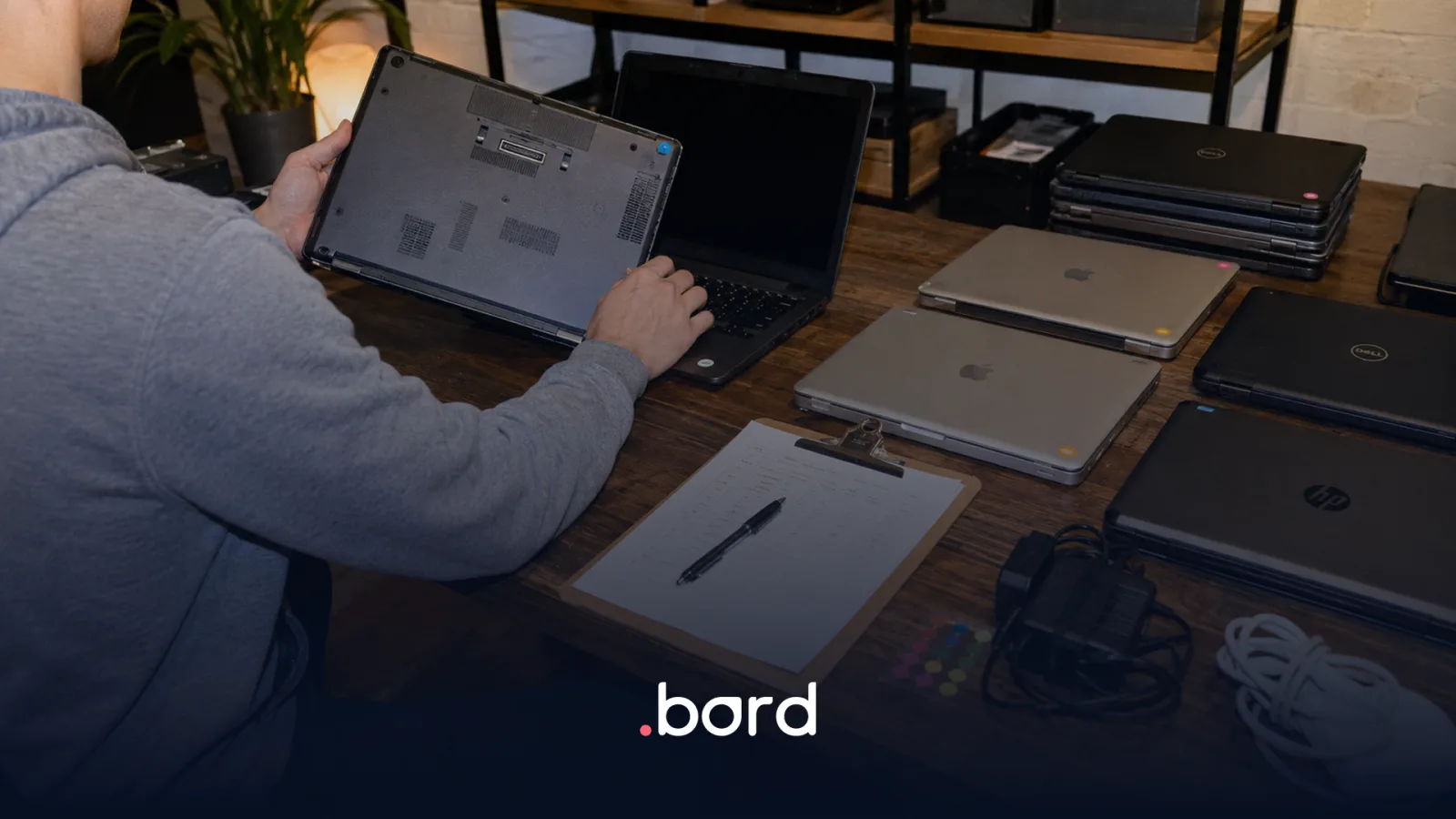
3. Review and grading
Each team is reviewed one by one and goes through the process of Grading (A, B, C, D, F, or X).
If differences are detected with the initial information, the customer is informed and the final offer is adjusted.
4. Final offer
The customer can accept the final offer or:
- Request the return of the equipment (with logistical cost), or
- Keep it in the warehouse by paying the monthly storage fee.
Information Security and Buyback
Whenever the computer does not arrive formatted, Bord erases data according to the standard NIST 800-88, ensuring the protection of corporate information.
- Computers blocked by MDM They cannot be sold.
- To proceed with the Buyback, the customer must release the equipment.
- The erasure certificate is delivered only if it was previously requested.
How the value of equipment is determined
There is no fixed rule, but in general Buyback offers fall between 10% and 20% of the original value of the equipment, depending on:
- Brand (Apple usually has the best resale value)
- Model and year
- Processor, RAM and disk
- Fitness (key factor)
Batch equipment (more than 20 units) receives better deals than individual equipment, as they reduce operational risk for buyers.
How is the Buyback paid
The value of the Buyback is credited as credit on the Bord platform, which can be used to:
- Services
- New equipment
- Discounts on future purchases
Direct cash payments are not made.
What happens to equipment that can't be re-marketed
When equipment is considered residual, the customer can choose to:
- Recycling (with an approximate cost of USD 150 per piece of equipment, depending on the country)
- Sale in parts to technical training centers
- Destruction in accordance with local regulations
This makes it possible to comply with internal and environmental policies.
Buyback and circular economy
The Bord Buyback is part of a strategy of circular economy, extending the useful life of equipment that can still be used by students, junior professionals or educational institutions.
In addition to recovering economic value, companies reduce waste and their environmental footprint.
Why choose the Bord Buyback
- Regional presence throughout Latin America
- Own wineries
- DSN with real equipment status
- Integration with onboarding, offboarding and storage
- A single supplier for the entire equipment lifecycle
In short
The Bord Buyback allows companies to:
- Recovering economic value from disused equipment
- Reduce storage costs
- Simplify IT inventory management
- Meet sustainability objectives
- Centralize the entire process in a single partner
Bord turns equipment that you no longer use into real value for your company.
Want a number before you talk to anyone? Find out what your company’s Mac is worth today and then see how the buy back works.